
Is It Illegal to Burn a Bible? Complete Guide
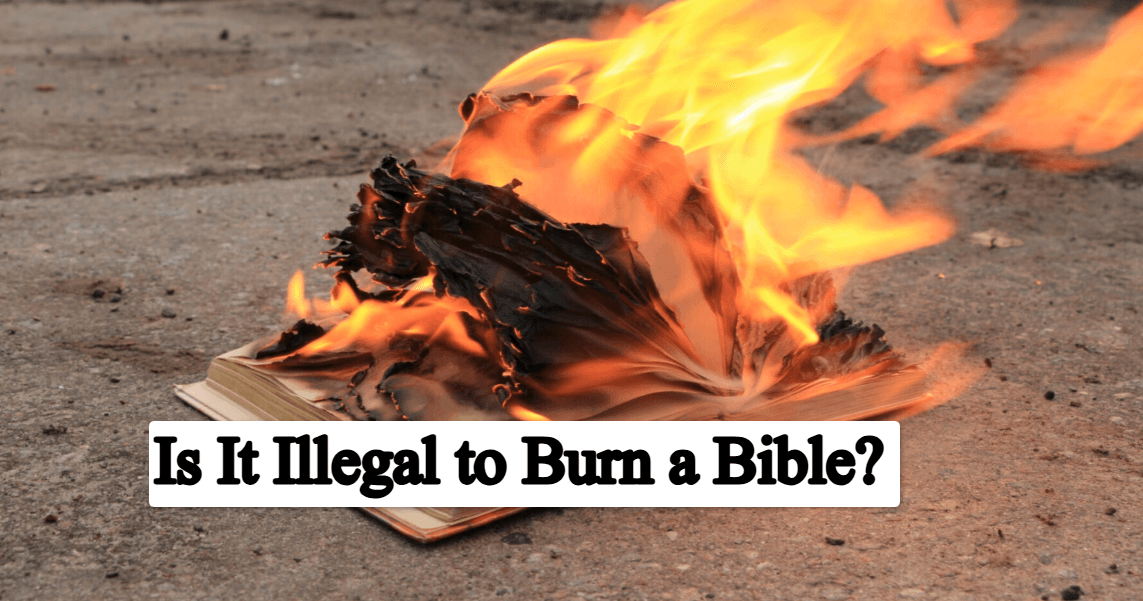
Burning a Bible is considered to be one of the most emotional and controversial actions that an individual can do. Although it is deeply offensive to some, the question from a legal point of view is straightforward is it legal to burn the contents of a Bible inside the United States?
The simple answer is no it’s not illegal according to U.S. law, but there are exceptions. Let’s look at exactly what law saysand the potential risks.
The First Amendment: Protecting Free Speech and Expression
In the First Amendment to the U.S. Constitution, every citizen has the right of freedom of expression and speech which includes actions that others might consider offensive or insensitive.
The protection was defended in the U.S. Supreme Court in multiple landmark cases. Most significant cases is Texas Johnson v. Johnson (1989) in which the Court declared in favor of burning of the American flag — a pious act which is a source of offense for many is protected the right to express political opinions within the First Amendment.
The same legal premise is applicable for the burning of religious text which include those of the Bible, Quran, or Torah. The act could be offensive or provocative, however, so long as it is carried out quietly and in peace and without threat of physical violence, or damage to property, it is constitutionally protected speech.
When Burning a Bible Can Become Illegal
While the act is protected in and of itself, how and where you carry it out could make it illegal. There are several scenarios that burning the Bible could be a violation of law:
1. Violation of Fire or Environmental Laws
Burning any object that is open to burning (including books or paper — could be limited by local regulations on fire or environmental laws.
- Many states and cities ban open flames without an approval.
- If the fire creates dangerous smoke or is triggered in the course of the time of a burning ban and you are in danger, you could face penalties of fines or misdemeanors.
While the protests are legal but burning is not. way of burns could result in it being a subject of citations in accordance with local ordinances.
2. Public Safety or Disorderly Conduct
In the event that burning the Bible takes place in an public space and results in a outrage, panic or physical conflict It could be considered unruly behavior or the incitation for violence.
Police can intervene if they think the action could compromise the safety of the public.
3. Property or Hate Crime Issues
If the Bible isn’t yours such as the Bible is taken from a library, church or a person else -burning it could be considered vandalism, theft, or a destruction of any property.
If you also burn the contents of a Bible to deter or target a religious community prosecutor could be charged with the act as an act of discrimination against a minority under state or federal law.
The main difference is the intent burning the contents of your Bible as a matter of expression is legal, but burning the Bible of someone else’s Bible to intimidate or harass isn’t.
Legal Summary
Legal:
- Burning your personal Bible in the name of personal expression or to protest.
- In private, and while still complying with local fire and safety rules.
Illegal:
- Burning the property of someone else (vandalism/theft).
- It is not recommended to burn the material in an open place that could trigger fear or violence.
- Breathing open or violating air quality regulations.
- Invoking the act to intimidate or harass people due to the religion of one’s choice (hate offense).
Ethical and Social Considerations
While the Constitution safeguards the right to burn your Bible, it does not mean that it is acceptable in the public eye or in any way unnoticed.
This can be:
- Inseverably offends the religious community.
- Reputations are damaged particularly if it is published on social media.
- Cause public outrage or loss of job opportunities.
In short, it could appear legal but it’s not sensible in the absence of authentic expression and not a provocation.
FAQs About Burning a Bible
Q. What is the legality of burning the Bible covered by the First Amendment?
Yes. Burning the Bible is a type of symbolic speech and is protected by the First Amendment, provided that it isn’t in violation of other laws.
Q. Could I be detained for burning the pages of a Bible?
It’s not for the act in itself it’s possible to be arrested if the act is done in a way that isn’t legal like in the course of a burning ban or on property belonging to someone else or in a manner that puts the public in danger.
Q. What is the definition of burning the Bible considered as a hate crime?
Only when it’s done to intimidate or intimidate an organization of religion. Burning your own Bible to demonstrate personal reasons or to protest does not constitute not an act of hate.
Q. Can I light a Bible in the public?
Technically, it’s a good idea it is, however, it’s also risky. A Bible fire in the public sphere could result in unruly conduct charges in the event that it causes disturbances or is in violation of local fire ordinances.
Q. What is the most secure method to get rid of the contents of a Bible?
If the intention is not to protest but to dispose the Bible, many faith-based communities advise burial, donation, or recycling the Bible in a respectful manner instead of burning it.
Conclusion
Legally legally speaking, burning a Bible isn’t considered illegal under the laws of the United States — it’s an act that is protected by The First Amendment’s protection to free speech. But, it’s the way you do it that matters. It is best to do it in a secure manner in private property and for non-malicious reasons remains within the legal guidelines.
Remember: even though the law guarantees your right to not be offended but it doesn’t shield your from moral or social consequences that could be ensuing.
