
Is It Illegal to Burn Money in the United States? Complete Guide
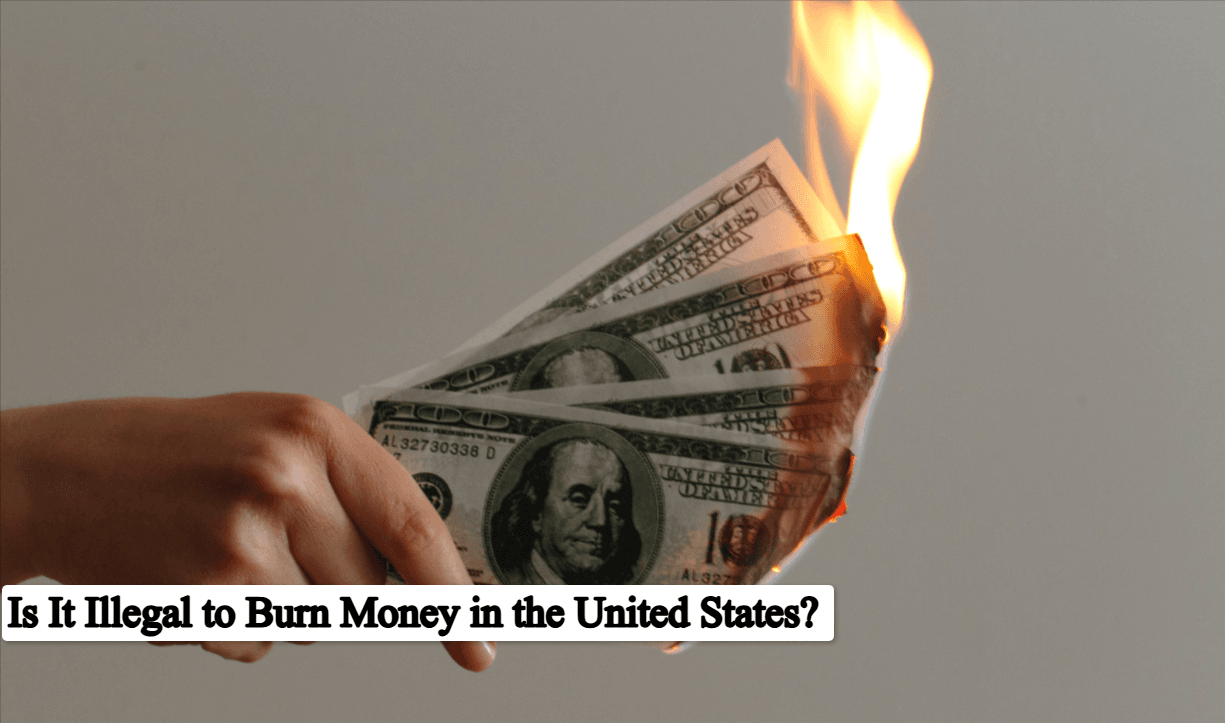
The use of money is commonplace everyday for food purchases and pay bills or even save to fund the next time. What happens if somebody decides to eliminate the currency? Perhaps out of anger or a sense of art, or even protest many have asked: Is it illegal to burn currency within the United States? The simple solution to that question is yes destruction of U.S. currency is a federal crime. Let’s find out why.
The Law Behind Burning Money
The United States, all paper coins and bills are part of the government of America and not the person who owns them. Although you are able to make use of money at your leisure but you aren’t legally entitled to the right to take it away.
The principal law that bans destruction or alteration of U.S. currency is Title 18 Section 333 of the United States Code. It specifically states:
“Whoever mutilates, cuts, defaces, disfigures, or perforates, or unites or cements together, or does any other thing to any bank bill, draft, note, or other evidence of debt issued by any national banking association, Federal Reserve Bank, or Federal Reserve System, with intent to render such item unfit to be reissued, shall be fined or imprisoned.”
If you deliberately burn, tear or damage the money to make it inaccessible it is in violation of the law of the United States.
Why the Government Prohibits Burning Money
There are several rational justifications for this law:
- Economic Stability – The U.S. government wants to ensure a steady supply of currency. If the citizens began destroying money in a frenzied manner this could cause disruption to the flow of money circulation.
- Anti-counterfeiting Prevention The deterioration of bills can cause it to be difficult for you distinguish counterfeit or illicit currency.
- Government Property Protection As currency is government-issued debt, the destruction of it is treated in the same way as destroying federal property.
Possible Penalties
Although prosecutions for burning cash in small amounts are uncommon however, the law allows for the possibility of. The offender could be punished with:
- Fines The exact fine amount can vary in the same way, but it is significant.
- Imprisonment in serious instances or major destruction, jail term of as long as the length of six months can be imposed.
- Federal Records Even if there is no prison time is served the presence of a federal crime recorded can impact the employment process and even travel.
In the majority of cases the law enforcement agencies will not investigate someone who burns a note or burns an amount of money due to a benign reason. But, massive or public incidents, especially when recorded or used to protest and/or protest, may draw legal attention.
Exceptions and Gray Areas
Certain situations blur the lines between art and education. For instance:
- Art Projects The Art Projects Some artists employ the shredded or altered currency in their paintings. If the currency isn’t destroyed beyond recognition or employed with no intention to defraud, authorities will not pursue steps.
- Accidental damage The accidental destruction of money (e.g. burning the bill in the fire) is not a crime.
- Coins and bills that are collectible Certain people frame or cut up coins or bills as collectibles. This is usually accepted so the intention is not to diminish the value of the note or deceive anyone else.
What To Do If Your Money Gets Damaged
If your cash is accidentally damaged, burned or damaged it is possible to get it repaired or replaced. In the Bureau of Engraving and Printing (BEP) runs an Redeeming Mutilated Credit Cards Program. It is possible to send damaged bills and, If more than 50% of the note is recognizable the BEP will repair the note for free.
FAQs About Burning Money
1. Are the consequences of burning money considered to be an expression of freedom or protest?
No. No matter what the motive is symbolic or in a way torching U.S. currency still violates federal law. The freedom of speech guaranteed by the First Amendment doesn’t protect acts that damage property owned by the government.
2. Do I have the option of shredding or cutting cash for amusement?
Technically, no. cutting or shredding bills to ensure they aren’t able to be used again is unlawful in the U.S. under 18. U.S.C. SS 333.
3. What happens if I decide to burn counterfeit or fake money?
Burning counterfeit or fake money is a legal practice so long as it’s not genuine currency and can’t be confused with authentic U.S. bills.
4. Are coins destroyed also considered illegal?
Yes. The defacement or melting of coins for purposes of profiting or altering the metal’s content could be against federal laws, like 18 U.S.C. SS 331.
5. Are there charges if I am not properly storing funds?
No. Damage that is accidental doesn’t meet the legal requirements for the intention to damage or deface money.
Conclusion
Inflicting damage or destruction to U.S. currency is not an uninvolved actit’s a federal crime in the context of Title 18, Section 333. Although minor offenses might not necessarily lead to criminal charges, deliberately damaging money is still illegal. If you damage your cash accidentally it is better to replace it using official channels instead of throwing it into the flames.
