
Is It Illegal to Burn a Cross? Complete Guide
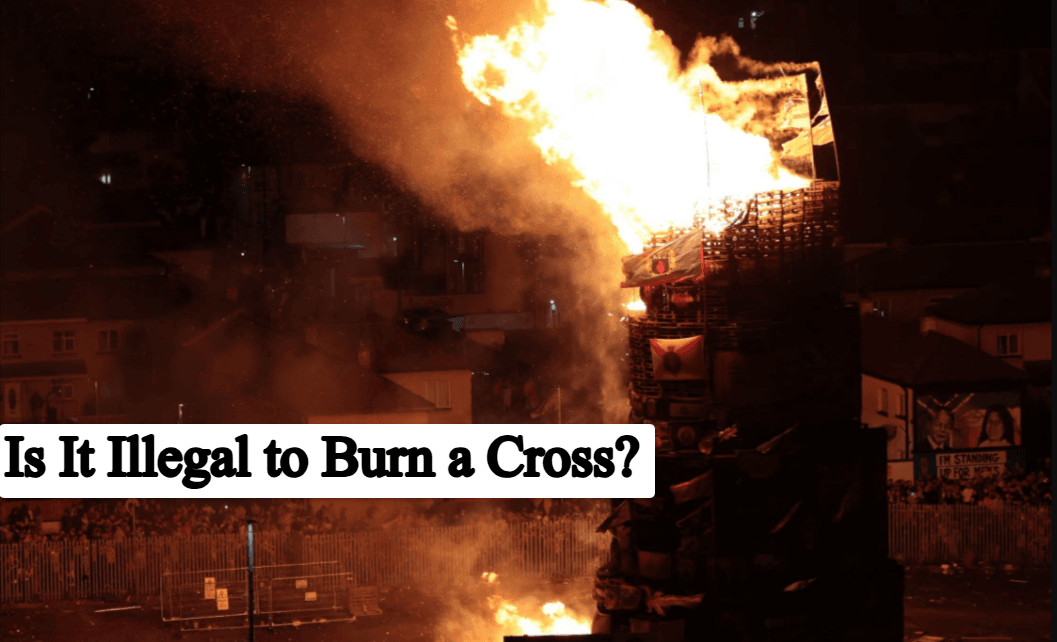
Burning crosses is one some of the more controversial and emotional actions throughout American history. Although some might see it to be a form of freedom of expression however, it is acknowledged as an act of violence and a symbol of fear and hatred particularly toward African Americans. It is therefore not legal to burn crosses on the United States?
In the end, that in many instances it is unlawful and especially so when the intention is to intimidate, threaten, or harass other people. But, the law draws an extremely fine distinction between protected expression and illegal conduct. Let’s take a look at the details of U.S. law says.
The First Amendment and Symbolic Speech
The First Amendment to the U.S. Constitution guarantees freedom of expression, which includes expression of opinion, even if it’s unpopular or offensive.
In R.A.V. V. City of St. Paul (1992) The Supreme Court struck down a local ordinance prohibiting burning crosses and ruled that the government is not able to ban expression solely due to the content. That means burning a cross, by itself, isn’t automatically illegal if it’s performed as symbolic speech, and not intended to be a threat to anyone.
However, the protections are only constrained. The Court made clear the matter in Virginia in v. Black (2003) that cross burning intended to inflict fear cannot be protected under the First Amendment.
When Cross Burning Becomes a Crime
The most important factor that renders cross burning illegal is the intent.
If the intention is to harass, intimidate or intimidate a person or group — particularly in relation to religion, race or ethnicity, it’s a crime in the state laws on hate crimes and federal civil rights laws.
For instance:
- Burning crosses in someone’s yard or at the doorstep of their home is considered to be a direct threat as well as a hate crime.
- Conducting this on public property in order to specifically target a certain group or a community is considered illegal intimidation.
- Even if there is no physical injury is incurred, the threat of symbolic violence can be enough to make it an offense.
According to federal law (18 U.S.C. SS 241 and SS 245) It’s a crime to interfere with or intimidate an individual’s rights by threats or violence and cross burning has always been used in this manner.
Penalties may be:
- Fines up to $250,000,
- Prison sentences of up 10-years and
- Higher penalties for bodily injury or property damage is caused.
State Laws on Cross Burning
There are many states that have specific laws addressing cross burning and hate-motivated intimidation.
- Virginia: Prohibits burning a cross with the intention of intimidate. Those who violate the law could be punished with up to five times the time in jail.
- North Carolina: Considers cross burning an Class H crime in the event of threatening.
- Georgia, Florida, and Louisiana: Include cross burning in their hate law or terroristic threat laws.
In the event that there isn’t a specifically-designed “cross burning” law exists prosecutors can still charge offenders in accordance with general criminal law such as terror threats, harassment arson, vandalism or threats to harm.
When It Might Be Legal (But Still Offensive)
Technically, one can legally burn an image of a crosses on their property to express expression of religion or politics– provided that it’s not aimed at intimidating anyone and is compliant with local fire safety regulations.
This distinction isn’t often used in the actual. Courts and law enforcement usually examine the context like the location, the audience, the timing, and messageto establish the intention.
If an average person would be afraid, the action is likely to be viewed as crime of intimidation but not as protected speech.
FAQs About Burning a Cross
Q. Is burning a cross a form of free speech?
It could be however only in extremely limited situations. If it’s an statement with no intention to be intimidating the other person, it could be protected by the First Amendment.
Q. Is it a crime to burn the cross that is on private property?
If the cross is located on your property and is not directed at someone else the cross may not be in violation of federal law. However, if the cross is evident to other people and appears scary, it may be considered an act of hatred crime.
Q. What happens if someone burns the cross in a demeaning symbol in public?
This is almost always legal. Burning a cross while in public or to denigrate the group, is deemed an act of criminal intimidation and can be in violation of the federal or state Civil rights law.
Q. Can burning crosses be considered as an act of hating?
Yes. It’s usually considered it’s a “hate crime” due to its long-standing use by groups such as that of Ku Klux Klan to threaten minorities.
Q. What are the consequences of burning the cross?
The penalties vary from state to state, but usually comprise fines, jail or prison sentences, and an indefinite criminal record. Federal offenses can lead to up to 10 years of prison.
Conclusion
Although there is a strong argument that the U.S. Constitution fiercely protects freedom of expression, burning crosses isn’t always a legal activity. The courts recognize its long and violent history as a sign of intimidation and racial tyranny.
If the act is done with the intention to harass or threaten or harass someone, it’s considered a serious offense under federal and state law. It’s often considered the definition of a hate crime.
The short version is that burning a cross in order to make an argument is only legal in theory, however burning a cross in order to frighten anyone is considered a crime. Be aware the freedom to speak ceases at the point where intimidation and threats begin.
